Last updated November 18, 2026


Free written scope consultation - allowances, timeline, and change-order rules on paper before a single trade is scheduled
Home Additions & ADU Maintenance Schedule: What to Do and When
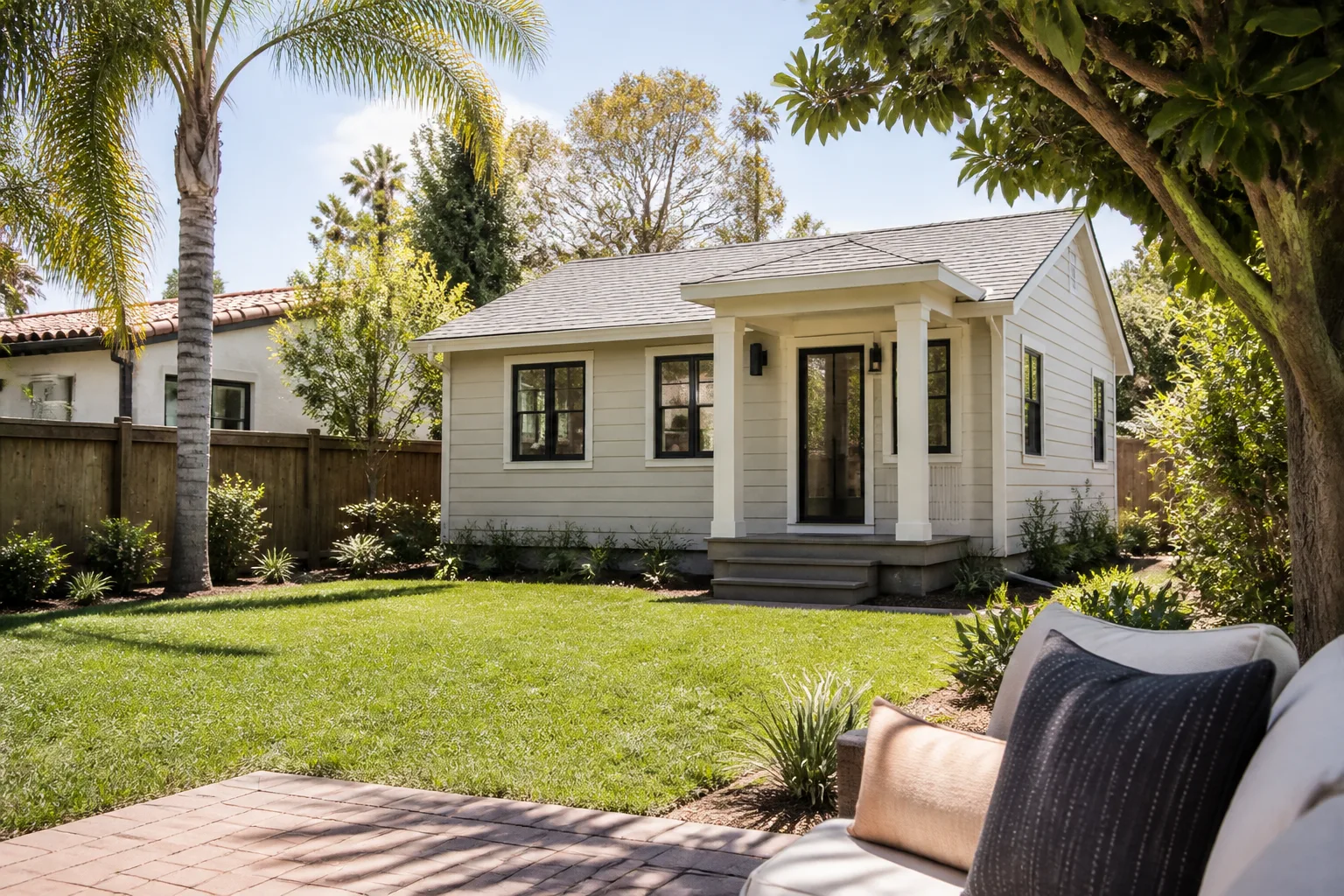
Here’s the thing nobody tells you when the last walkthrough ends and the crew pulls out of your driveway: your new space isn’t finished. It just started its clock. The flashing where your addition ties into the original roofline, the caulk joints around the new windows, the HVAC trunk line that got extended into the back bedroom – all of it starts moving, drying, and settling the day the doors close behind you. In Nevada’s swing between 110-degree summers and hard winter cold, that first full seasonal cycle does more to your new construction than the next ten years combined. This guide lays out exactly what to check, when to check it, and what to write down, so a five-hundred-dollar fix next spring doesn’t turn into a fifteen-thousand-dollar one in Sunrise Manor a few years from now.
Quick Answer
Home additions and ADUs need an annual maintenance schedule that centers on the connection points: the flashing and roofline where new meets old, the caulk and sealant joints, and the extended or added HVAC system. In southern Nevada, plan a roof and flashing inspection every spring before monsoon season, a caulk and sealant walk every fall, HVAC filter changes every one to three months, and a full first-year inspection after your first complete seasonal cycle. Keep your permit and inspection paperwork filed with your maintenance records – it’s a document you’ll need when you sell or refinance.
Styles & brands we work with
- Kitchen remodeling
- Bathroom remodeling
- Home additions & ADU
- Roofing
- Windows & doors
- Driveway & pavers
- Fence
Table of Contents
- The First-Year Inspection: What to Watch After One Full Seasonal Cycle
- Roof and Flashing at the Old-to-New Connection
- HVAC Filters and Ductwork for an Extended System
- Exterior Caulk and Sealant: Nevada’s UV Problem
- Keeping Your Permit and Inspection Records as a Maintenance Asset
- The Seasonal Calendar: What to Do Each Quarter
- ADU-Specific Maintenance: What Differs From a Room Addition
- Common Mistakes to Avoid
The First-Year Inspection: What to Watch After One Full Seasonal Cycle
A new addition goes through a natural shakeout period. Lumber dries and shrinks. Stucco and drywall cure. Sealants set, then flex for the first time through a real summer. None of that means something is wrong. But that first full cycle is when the small gaps show up, and the first year is when they’re cheapest to close.
In Sunrise Manor, the first year is genuinely harder on new construction than in most of the country. You get months of intense dry heat that pulls moisture out of everything, followed by monsoon moisture that tests every joint you have, then a cold snap that makes it all contract again. We’ve seen newly built ADUs in Sunrise Manor develop a hairline crack at a drywall corner by August and a loosening window seal by December – both routine, both quick fixes, both a real problem if left for three years.
What to look at after your first full cycle:
- Walk the interior ceiling and upper wall of the addition and look for any discoloration, especially where the new roofline meets the old house.
- Check every exterior caulk joint around windows, doors, and corners for separation or cracking.
- Look at the base of your addition’s exterior walls for any sign of moisture wicking, especially after a monsoon.
- Test the HVAC in the new space separately from the rest of the house – the temperature should hold within a couple degrees of the main home.
- Open and close every new window and door. Sticking means the framing is moving, and worth a look.
- Check the ground at the foundation line. Soil settling away from the slab is normal; negative slope that sends water toward the building is not.
The full inspection should happen roughly one year in, ideally before the first summer break – which means spring. If your addition finished in winter, schedule it for the following spring. Barrett & Sons pulls permits and signs inspections on every eligible job, and the local pro who performed the work is your starting point if that first-year walk turns up anything you aren’t expecting. This is also where our Home Additions & ADU in Sunrise Manor team spends a lot of time after completion, helping homeowners read their own buildings.
Roof and Flashing at the Old-to-New Connection
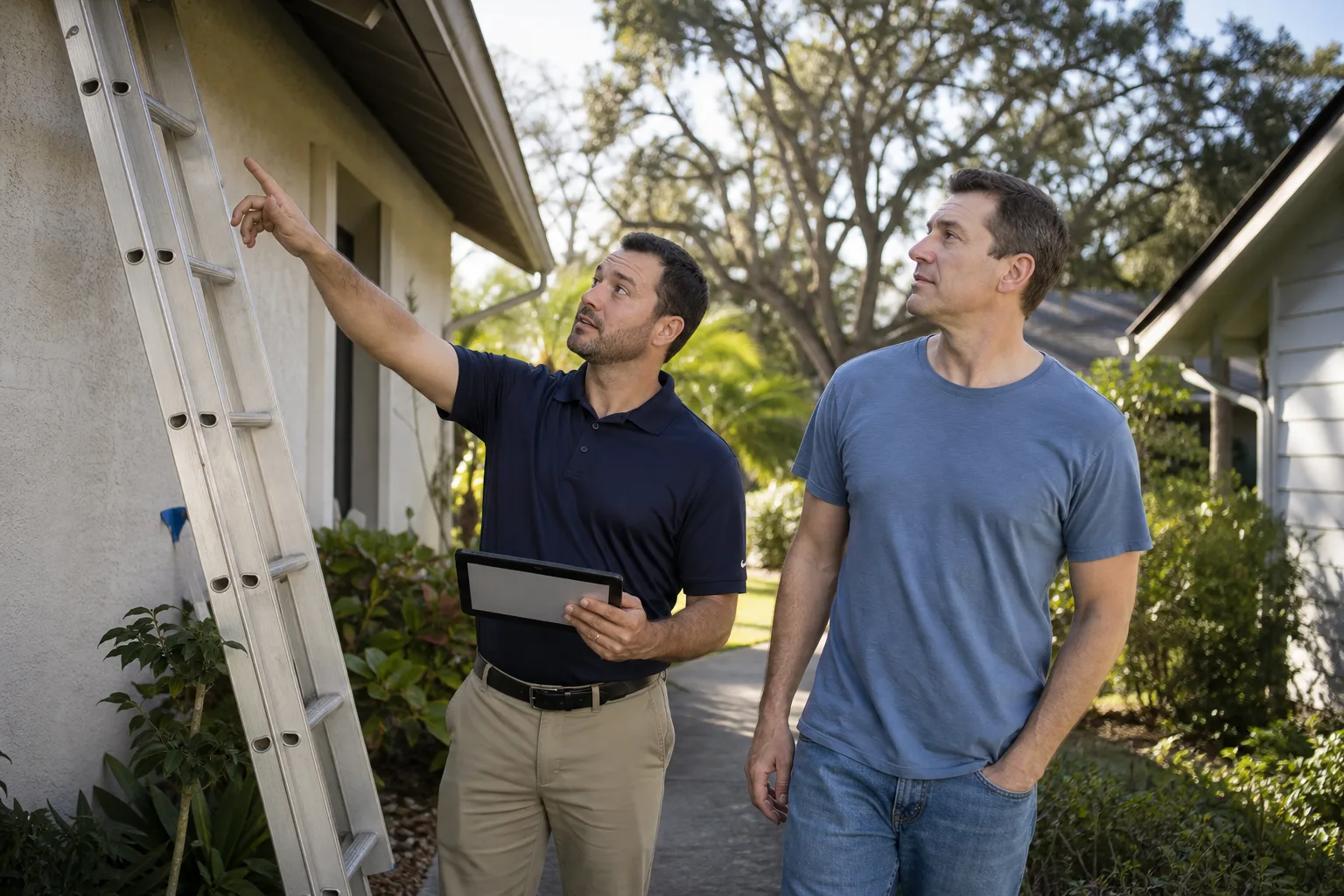
Here’s the most likely failure point on any addition or ADU: the flashing where the new roofline ties into the original. It’s the spot where two different structures, built at two different times, have to shed water as one. And it’s the spot most homeowners never look at.
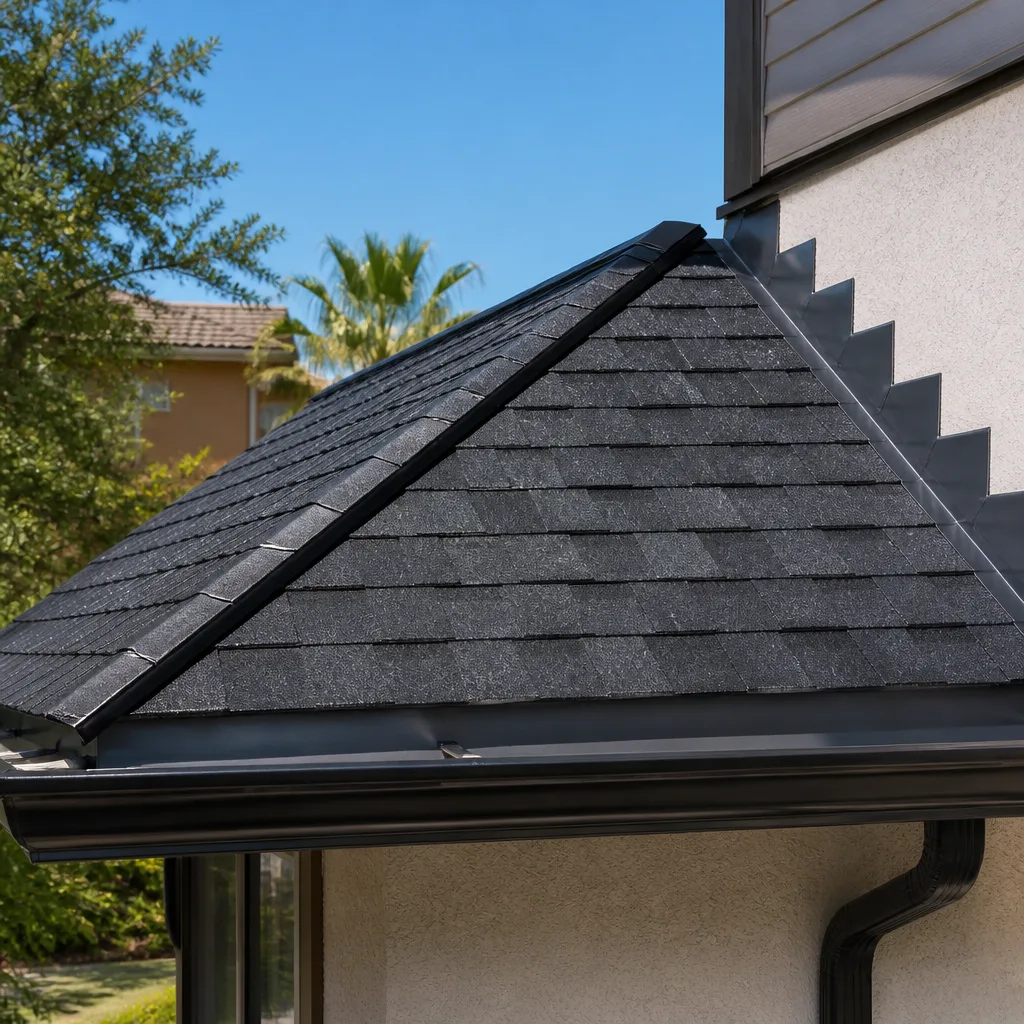
Flashing is the metal that runs along the juncture to direct water away from the seam. When it’s properly installed, it does its job without any attention. When it fails – even a little – water finds the gap and gets inside the roof assembly, where you won’t see it for months. By the time a stain shows on the ceiling, you’re usually looking at rotten sheathing and possibly framing repair, not a flashing repair. A $250 flash inspection is the cheapest insurance on the whole building.
In our experience, southern Nevada is not forgiving here. The daily heat expansion of a roof deck in July is real, and it works the fasteners in flashing loose faster than most climates. Then monsoon moisture gets a window. Then UV bakes the rubberized membrane. This connection point needs eyes on it every year – not every three years.
What to look for when you inspect the new-to-old roofline:
- Lifted, rusted, or missing fasteners on the flashing apron
- Any separation between the flashing and the roofing material on either side
- Dried, cracked, or receded sealant at the seams
- Granule loss or discolored shingles near the connection – a sign water is pooling or the flashing isn’t shedding as it should
- Dents or dents-repaired signs from hail, which can leave fasteners stressed even when the surface looks fine
We install GAF and CertainTeed roofing on additions, and every one gets the same treatment at the connection point. Look at this flashing in spring, before the first monsoon. Look at it again after the last monsoon. If you see anything you aren’t sure about, get eyes on it before the next rain – never after. If you’re wondering what the rest of your roof needs, our Barrett & Sons Construction Sunrise Manor home page covers the full picture.
HVAC Filters and Ductwork for an Extended System
An addition or ADU almost always means your HVAC system got bigger – either new equipment for the ADU or an extended trunk line for the addition. And that means maintenance that didn’t exist before your project. If the addition tied into an existing system, your filter is now working harder across a larger square footage, and the filter change interval that worked for the old house may need to shorten.
The general rule for filter changes is every one to three months. If you have pets, allergy sufferers in the house, or the addition added a lot of square footage, stay at the one-month end. In Sunrise Manor, where dust from the desert and construction in surrounding areas is real, we lean toward one month for most extended systems. A clogged filter drives up your energy bill and forces the compressor to work harder, and the compressor is the expensive part.
Beyond the filter, walk the ductwork once a year:
- Check that every register in the new space has air moving through it while the system runs
- Look for any visible seam separation on exposed ductwork
- Listen for whistling or whistling-then-rattle – both can indicate a loose damper or duct connection
- Test the temperature in the addition versus the main house. More than a 3-degree difference under normal load is worth investigating
For an ADU, the list is different because the ADU likely has its own system. Change the filter on the same schedule, check the condensate line before summer (it’s a small thing that causes big water damage when it clogs), and note the refrigerant check on the calendar every other year. Ductless mini-splits – which show up often in Sunrise Manor ADUs because they’re efficient and easy to zone – need their filters cleaned monthly, not quarterly, and the outdoor unit coils rinsed at the start of summer.
Exterior Caulk and Sealant: Nevada’s UV Problem
Nevada is hard on sealants. The UV index runs high most of the year, and that breaks down the elastomeric caulks and exterior-grade silicone faster than the manufacturers’ published lifespans suggest. A joint that would hold up five years in a mild climate can start cracking in two or three here. That’s not a defect, it’s the reality of the climate, and it’s why exterior caulk deserves a scheduled walk every fall.
What to inspect and re-caulk:
- Window perimeters, inside and out
- Door frames and thresholds where they meet the addition wall
- Corners where the addition siding meets the original house
- Any penetration: hose bibs, vents, electrical connections
- The top and bottom of trim boards, which are where water hides
Fall is the right season for this walk because the temperatures are moderate (caulk needs to be applied in a reasonable range) and because it sits ahead of any winter moisture. Pull any joint that’s cracking, separating, or has lost adhesion, clean it out, and re-seal with a UV-rated exterior sealant. Don’t caulk over a failed joint – that just hides the water. And on the ADU or the addition, don’t assume your Boral siding or PGT windows are immune to needing attention. Good materials resist water, but they don’t seal themselves.
Keeping Your Permit and Inspection Records as a Maintenance Asset
Here’s a piece of advice we give homeowners more than almost any other, and it never makes it into a maintenance guide: keep your permit and inspection paperwork. This is a maintenance asset, not just a file cabinet decoration.
Why it matters. Every inspection sign-off on the addition proves the work was done to code. When a future buyer’s inspector asks about the addition, or when your lender orders an appraisal for a refinance, that paperwork is the difference between your square footage counting and your square footage being questioned. We’ve seen homeowners lose negotiation leverage because they couldn’t produce the inspection record for a basement build-out or an ADU – the structure was fine, but the paper trail wasn’t there. Same story when insurance asks about replacement cost after a storm.
How to keep it:
- Scan every permit, inspection card, and signed-off certificate to a folder – name it clearly and back it up.
- Keep a paper copy with your home’s other records – deed, survey, warranty documents.
- Add the dates of every inspection to a maintenance log, so you have a record of when the work was signed off.
- If you ever hire a contractor for a follow-up project, hand them a copy so they don’t have to pull the same records.
This is why every eligible job at Barrett & Sons is permitted and inspected – the permit inspector works for you, not for us, and that signature is your proof.
The Seasonal Calendar: What to Do Each Quarter
If you remember nothing else from this guide, remember the schedule. Here’s the version to put on the refrigerator.
Spring (March through May)
- Inspect roof and flashing at the old-to-new connection
- Test the HVAC in every zone of the addition or ADU
- Check the ground for negative slope around the foundation
- Walk the interior ceiling and upper wall of the new space
Summer (June through August)
- Change HVAC filters monthly if extended into the addition
- Clean mini-split filters and rinse outdoor coils if you have them
- Check condensate lines for the AC
- Look at exterior caulk for heat-cracking – the hottest months are the tell
Fall (September through November)
- Re-caulk any failed exterior joints
- Inspect the flashing a second time, after monsoon season
- Clean gutters and downspouts, and confirm water is flowing away from the addition
- Walk the ADU or addition interior for anything new
Winter (December through February)
- Freeze protection: drain and shut off exterior hose bibs if you’re in the coldest parts of the valley
- Check the door sweeps on exterior doors of the addition – heat loss is a real cost
- Review your maintenance log for anything you deferred
- Schedule your annual professional inspection, so it’s done before spring
We’ve watched the same homeowners in Sunrise Manor save thousands by keeping this calendar, and we’ve watched others spend that savings twice over because they didn’t. If you own an addition or an ADU in Sunrise Manor, this schedule is the cheapest construction insurance you’ll ever buy.
ADU-Specific Maintenance: What Differs From a Room Addition
An ADU – whether it’s a detached garage conversion, a backyard cottage, or a portion of the home carved off for family – has a few maintenance items a room addition doesn’t. The biggest one is that an occupied ADU means someone is living in the structure, and that changes what a failure looks like.
Room addition: typically a failure means moisture intrusion you have to fix before it spreads to the rest of the house. ADU: a failure means moisture intrusion, plus it means the occupant’s comfort and health are affected. A roof leak on a room addition is an expensive problem. A roof leak on a rented ADU is an expensive problem, a tenant relations issue, and a possible habitability question.
The list for an ADU in Sunrise Manor:
- Yearly roof and flashing inspection – same schedule as an addition, but now with more urgency
- Yearly water heater flush and anode rod check
- Yearly smoke and carbon monoxide detector test – every room, no exceptions
- Seasonal HVAC service, plus filter changes monthly if the unit runs hard
- Yearly exterior caulk and sealant walk
- Yearly check of any exterior stairs, decks, or railings for looseness
- Every two years, a look at the fire-rated separation between ADU and main house, if they’re attached
If you’re still planning the project rather than maintaining one, our guide to Fence Installation in Sunrise Manor covers a related detail – the property line and access planning for a detached ADU – and our Driveway & Pavers in Sunrise Manor page covers the approach, parking, and drainage work that usually happens alongside ADU construction in Sunrise Manor.
Common Mistakes to Avoid
- Skipping the first-year inspection entirely. New construction moves. A first-year walk catches the small stuff when it’s small. Wait three years and you’re paying for repairs that would have cost almost nothing.
- Inspecting the roof only when you see a stain. By the time water shows inside, it’s been coming in for months. The flashing inspection is a spring ritual, not a reaction to a leak.
- Caulking over a failed joint. A bead of new sealant over old, cracked caulk hides the water but doesn’t stop it. Pull the failing joint, clean it out, re-seal one time, correctly.
- Changing HVAC filters every six months. For an extended system in Sunrise Manor, one to three months is the working range. Dust and heat degrade filters faster here than in cooler climates.
- Filing permits in a drawer you’ll forget. Inspection records are future selling and refinancing leverage. If you can’t produce them when a buyer’s inspector asks, your perception of the addition’s value takes a hit.
- Letting the ground slope back toward the addition. Soil settling is normal. Negative slope that directs water toward the foundation isn’t. Fix the grading in the fall, before it finds a way inside.
- Assuming a paid job means a maintenance-free job. Every addition and ADU needs attention in its first years, no matter who built it. The bill is in the calendar, not the craftsmanship.
See the difference
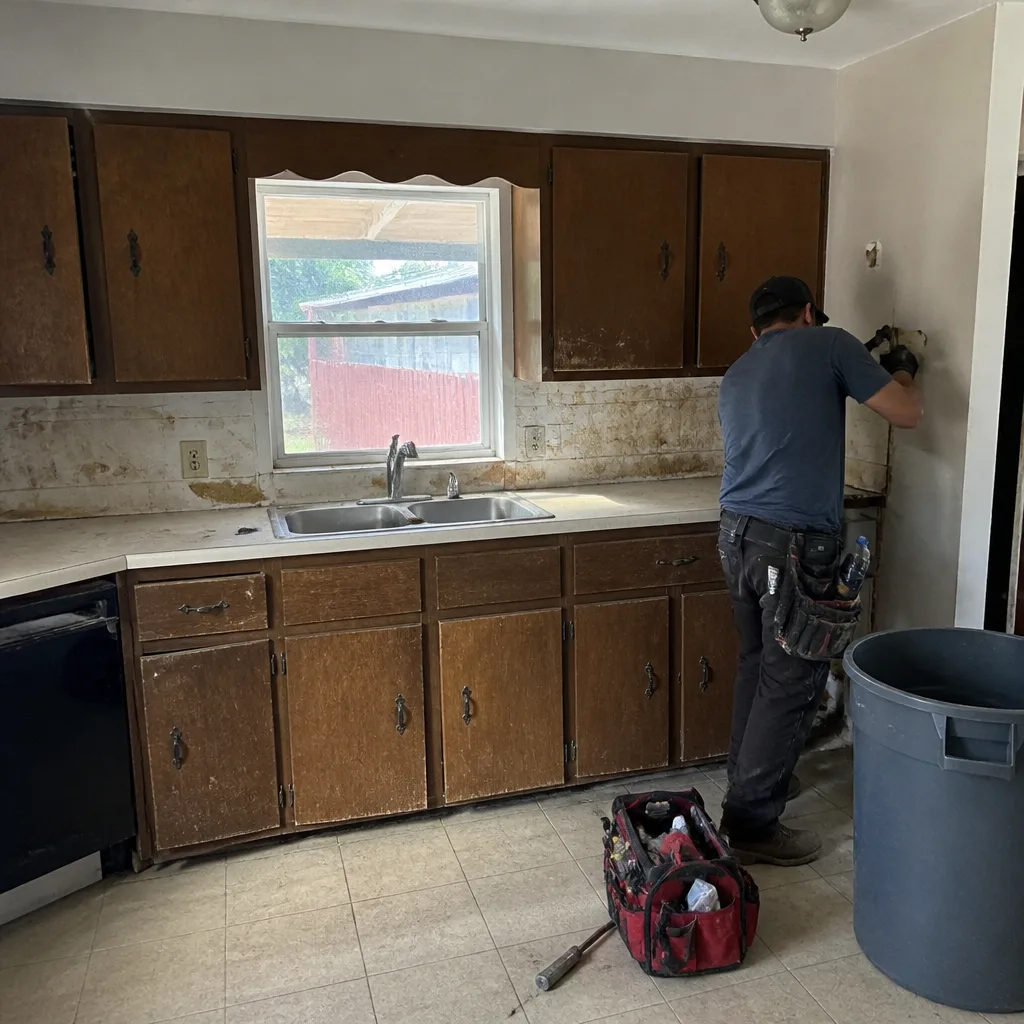 Before
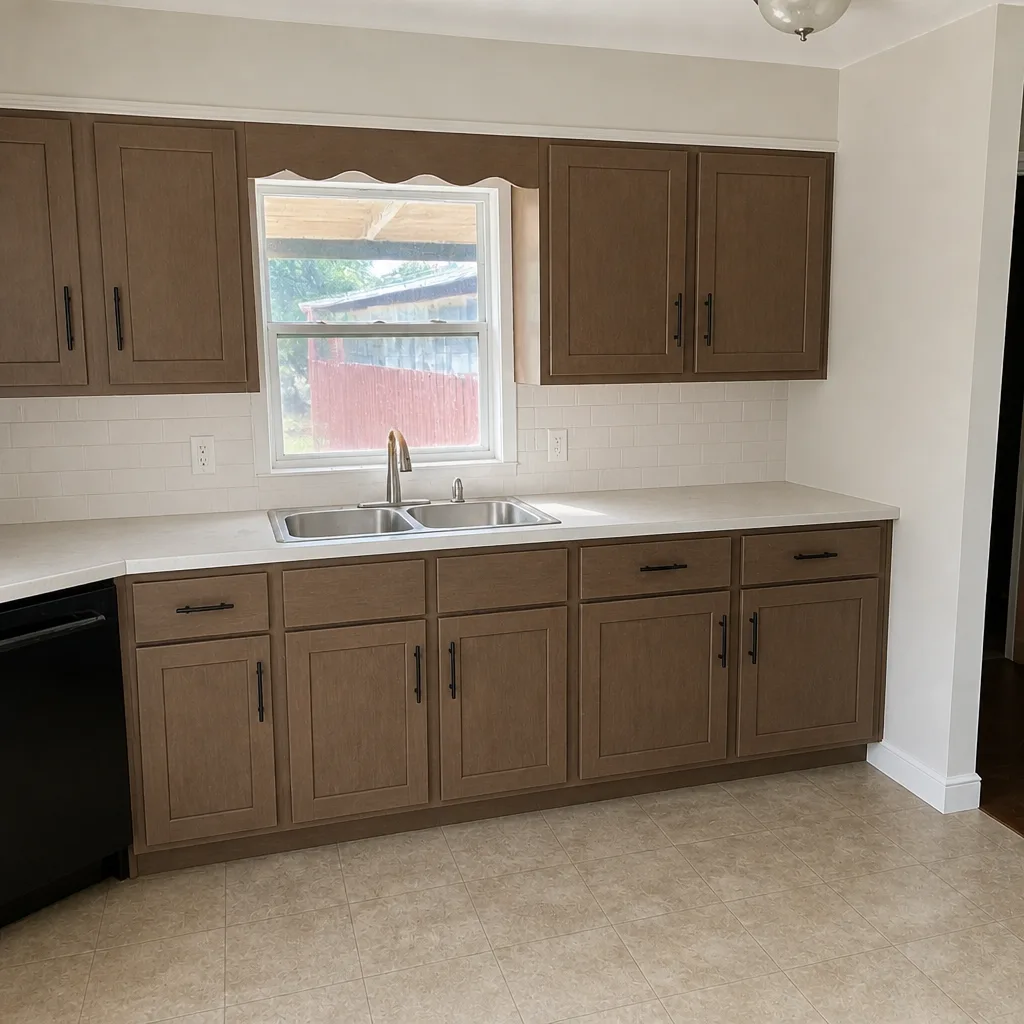 After
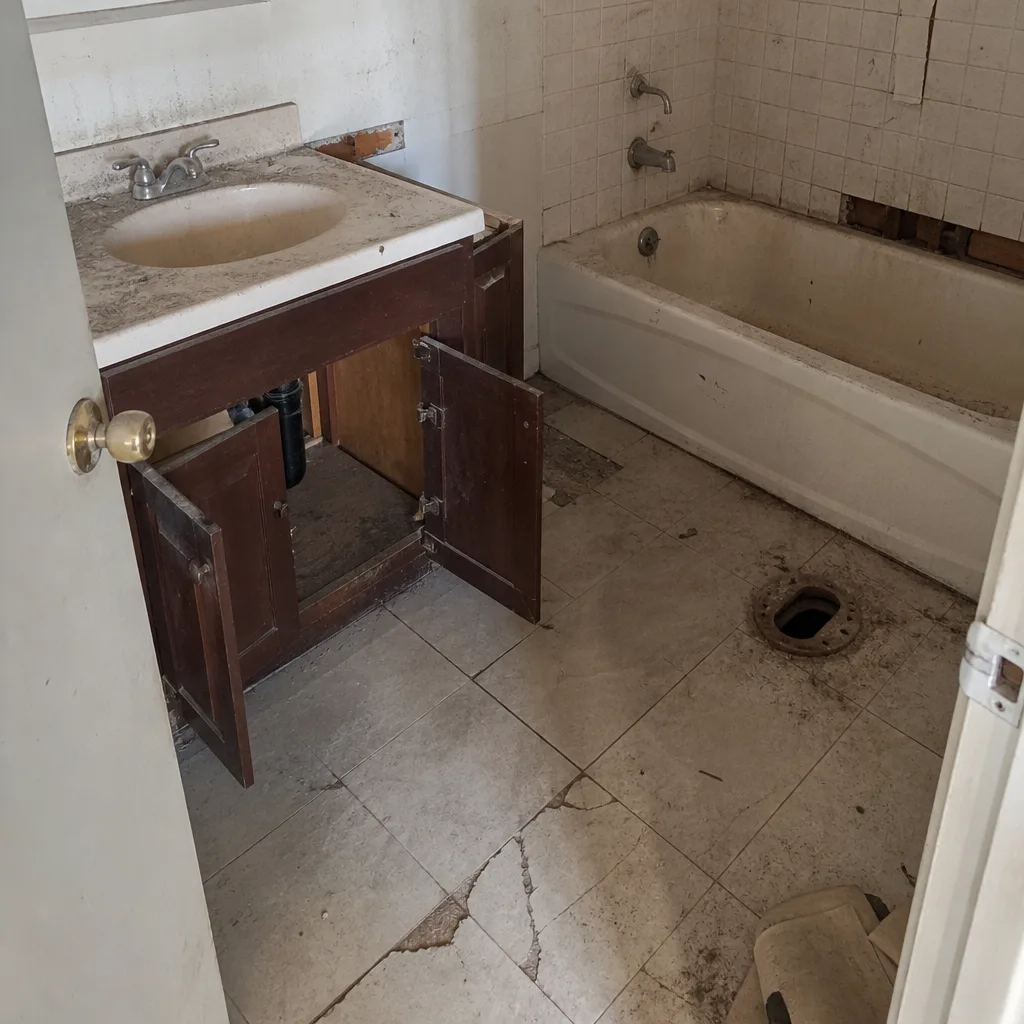 Before
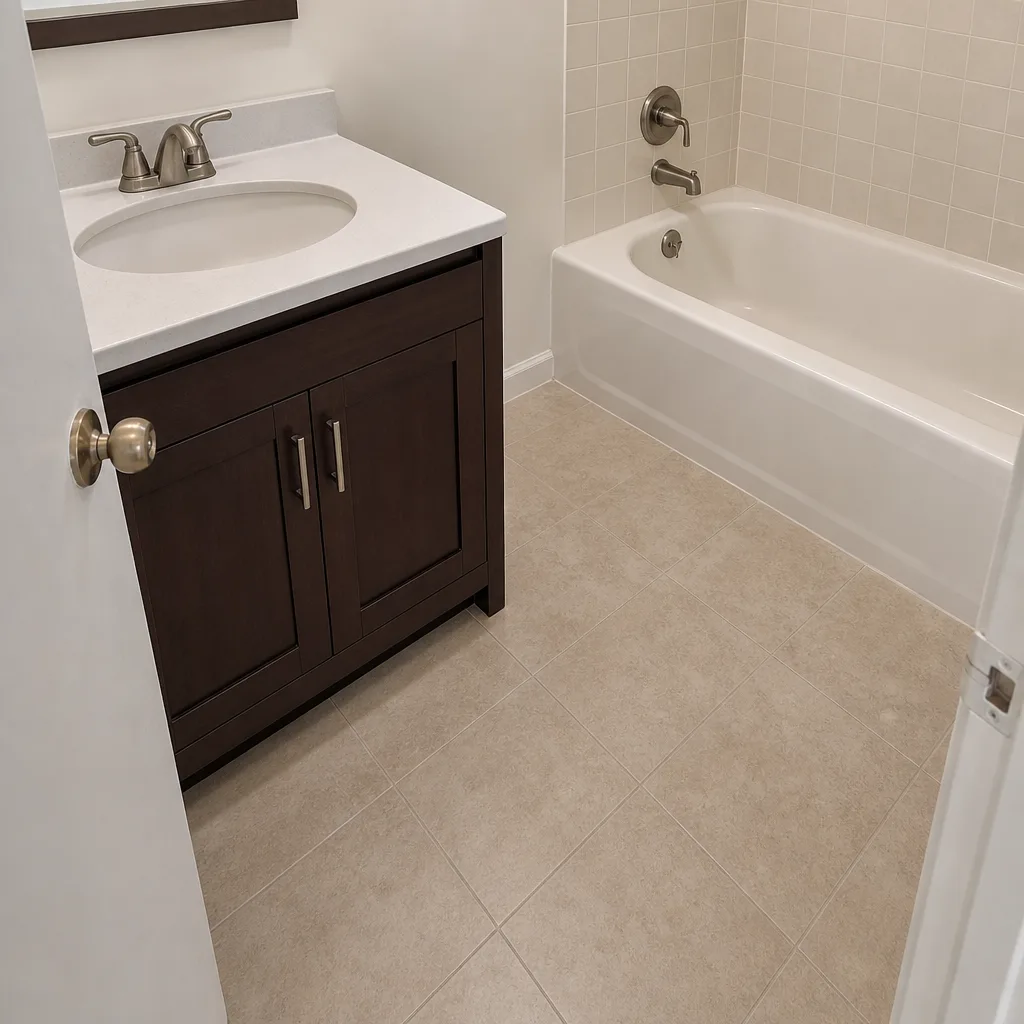 After
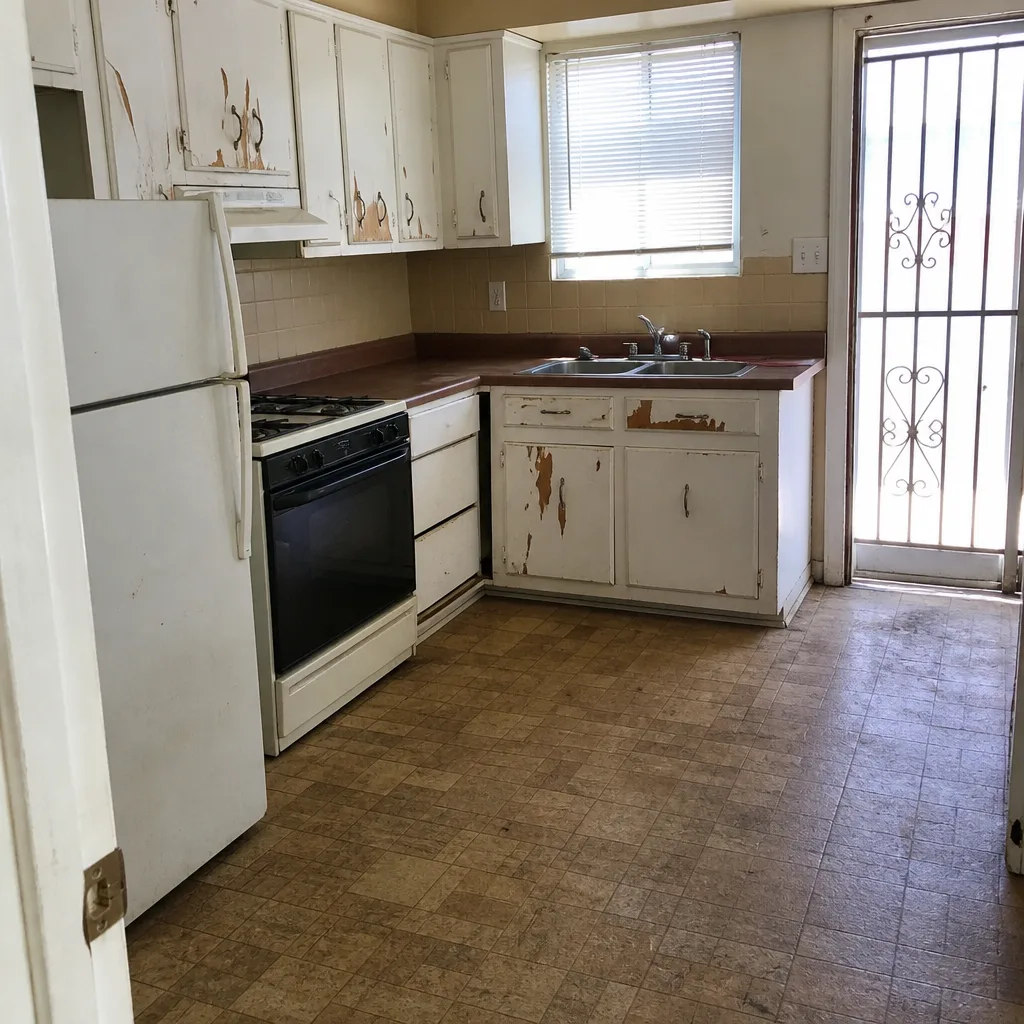 Before
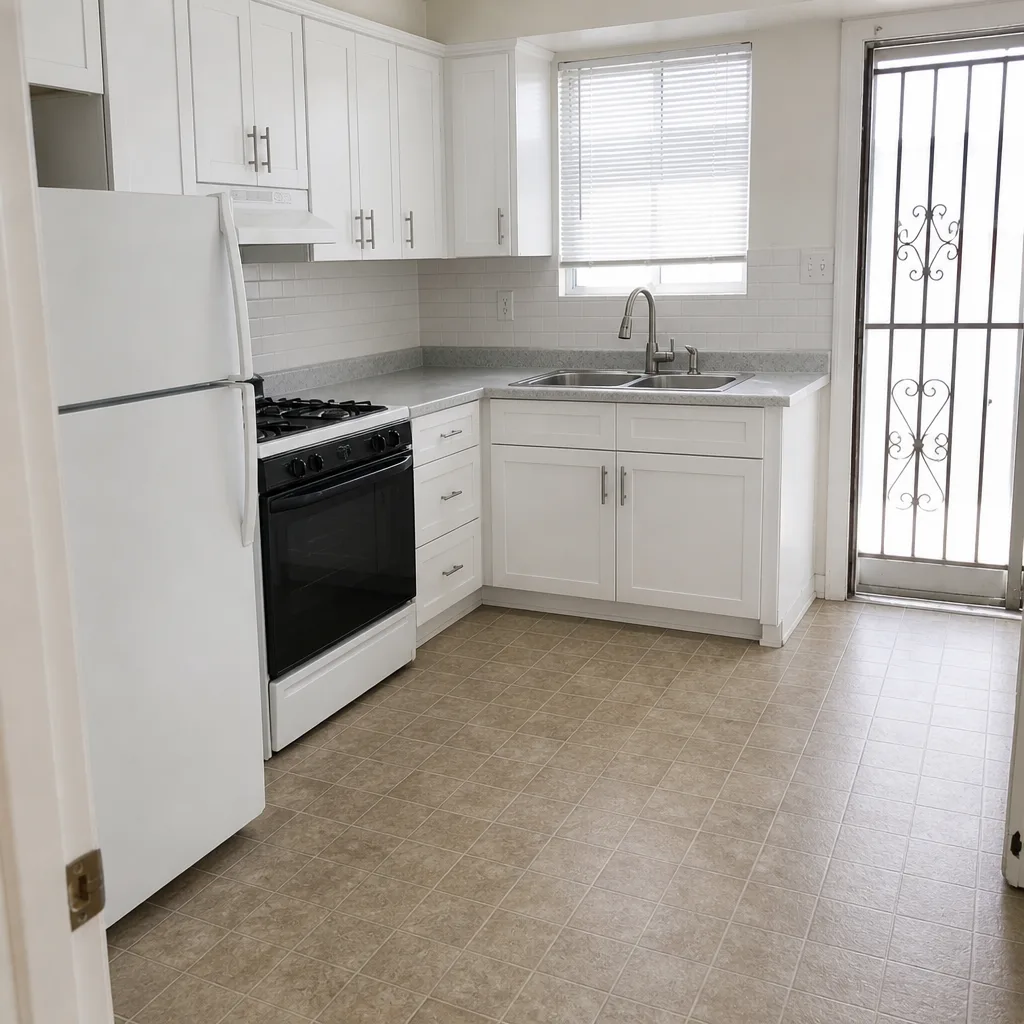 After
When to Call a Professional
Some maintenance is DIY. Some is not. Call us, or any licensed contractor, for the following:
- Any sign of water intrusion – discoloration on a ceiling, staining on a wall, moisture at the base of the addition
- Flashing you aren’t sure about. You’re not qualified to judge a flashing detail, and we’d rather look at it than have you guess
- An extended HVAC system that won’t hold temperature, or a mini-split with a refrigerant issue
- Any structural question – cracks in drywall at a corner are usually cosmetic, but a crack that widens over weeks is not
- Roof, flashing, and sealant work at the old-to-new connection. This is high-work and the failure modes are expensive
Barrett & Sons Construction Sunrise Manor offers free estimates in Sunrise Manor. Call (844) 312-0069 and a live person answers, because our phone is on a real desk, not a server. Every price change happens in writing before work proceeds, and every completed job is backed by the written 90-Day Done Right Promise.
Frequently Asked Questions
Every year, in spring before monsoon season, and a second time after the monsoon. The old-to-new roofline connection is the single most likely water entry point on any addition, and in southern Nevada’s heat swing it loosens faster than most of the country. Call (844) 312-0069 if you’d rather have a pro look at it – free estimates.
The connection points. Walk the interior ceiling and upper wall of the new space for discoloration, then check every exterior caulk joint around the new windows and doors, then test the HVAC in the addition’s zone. Heat expansion, monsoon moisture, and winter cold hit new materials hardest in the first full cycle. Our pro can do a first-year walk with you – free estimate.
Every one to three months, leaning toward one month if the addition added substantial square footage or the home has pets. In Sunrise Manor, dust and heat degrade filters faster than the general rule assumes. A clogged filter drives up energy bills and strains the compressor. Call (844) 312-0069 for a whole-system check.
Yes, as a maintenance asset. Those records are your proof the addition was done to code, and they matter for a future sale, a refinance appraisal, and an insurance claim. Scan them, back them up, and keep a paper copy with your deed. A contractor who pulled permits can hand you a copy of the inspection record – that’s how it should work.
Walk it every fall, and re-caulk joints that are cracked or separated. Nevada’s UV exposure breaks down caulk in two to three years – faster than the manufacturer’s mild-climate estimates. Don’t caulk over a failed joint; pull it, clean it, and re-seal. If you want a pro walk-through, call (844) 312-0069.
An ADU has more people-facing systems (water heater, smoke detectors, exterior stairs) and more urgency when something fails, because someone lives in the space. The roof and flashing schedule is the same. The HVAC filter schedule is often tighter. If you want a maintenance calendar built for your ADU, call (844) 312-0069 – estimates are free.
The Bottom Line
Your addition or ADU is not maintenance-free just because it’s new. The connection points – flashing at the old-to-new roofline, caulk and sealant, extended HVAC – are where the maintenance lives, and they need attention on a schedule, not in response to a stain. Do a first-year inspection after the first full seasonal cycle in Sunrise Manor. Inspect roof and flashing every spring and fall. Change filters every one to three months. Walk the caulk every fall. Keep the permit and inspection paperwork like the asset it is. If a pro is who you want doing the walk, Barrett & Sons Construction Sunrise Manor offers free estimates.
Call (844) 312-0069 to schedule your free estimate. A live person answers, day or night.
Written by the team at Barrett & Sons Construction Sunrise Manor.