
Last updated November 18, 2026







Free written scope consultation - allowances, timeline, and change-order rules on paper before a single trade is scheduled
Home Additions & ADU Warning Signs Every Homeowner Should Know
Every homeowner who’s ended up in a dispute over an addition project thought the warning signs were just “how contractors work” – until they compared notes with someone who had a good experience and realized nothing about it was normal. By the time the drywall goes up and the mistakes are baked in, you’re several payments deep and arguing about who’s at fault. Here’s what most people miss: the signals that a project is heading toward trouble almost always show up in the first two weeks, in the contract language, the permit status, and how the crew behaves on site. This guide walks through each of those early tells so you can catch them while they’re still cheap to fix, written from our vantage point here in Sunrise Manor where we’ve watched a lot of projects go both ways.
Quick Answer
The most reliable warning signs of a troubled addition or ADU project appear before real construction starts: a contract with vague scope language and no written change-order clause, a permit you can’t verify in Clark County’s online system, subcontractors you never agreed to hire, and payment schedules that front-load cash before milestones are met. Any one of these in the first two weeks is a reason to slow down and ask hard questions. Two or more together means stop and get a second opinion before another dollar moves.
Styles & brands we work with
- Kitchen remodeling
- Bathroom remodeling
- Home additions & ADU
- Roofing
- Windows & doors
- Driveway & pavers
- Fence
Table of Contents
- Contract Red Flags That Show Up on Page One
- The Payment Schedule Test
- How to Verify a Permit in Clark County
- When the Crew Isn’t the Crew You Hired
- What to Photograph Before Drywall Goes Up
- Mid-Project Money Warning Signs
- What a Good Contractor Does in Week One
- Common Mistakes to Avoid
Contract Red Flags That Show Up on Page One
Most homeowners read the number at the bottom and skim the rest. That’s exactly backwards. The scope language and the change-order clause matter more than the total, because the total is a guess until the scope is nailed down. A vague contract is a contract that gets interpreted later, and it never gets interpreted in your favor.
Watch for these phrases in your contract before you sign anything:
- “Standard construction per plans” with no itemized allowance list. Standard to whom? An allowance that isn’t on paper is a surprise waiting for a date.
- No written change-order clause. If the contract doesn’t require every scope change and price change to arrive in writing before work proceeds, the final bill is whatever the contractor decides it is.
- Materials listed by brand name with no model or grade. “Andersen windows” covers a wide price range. So does “tile.” Vague brands hide real money.
- No permit responsibility language. Who pulls the permit and who pays for it? If it isn’t stated, it becomes an argument in month two.
- Missing finish dates and delay terms. A start date is not a finish date. Ask what happens if the project runs long, and get the answer in the contract.
Here in Sunrise Manor, we see a specific version of this: additions built against existing block walls on lots where setback rules are tighter than people expect, and the contract never mentions who verifies setbacks. That conversation has to happen before the first permit is filed, not after the footer is poured. For a full picture of how this scope work should look before you commit, see our overview of Home Additions & ADU in Sunrise Manor.
The Payment Schedule Test
Here’s the single fastest way to read a contractor’s business health: look at how much money they want before the first milestone. A front-loaded payment schedule is the most common warning sign we see, and it’s the one homeowners rationalize away because the sales pitch was good.
Run these checks on the schedule:
- A deposit over roughly 10 to 15 percent. Small deposits are normal. Big deposits are working capital for the contractor, not a good-faith number.
- Large payments before a completed, inspected milestone. A payment for “materials delivered” should require you to see the materials.
- No retainage at the end. Holding back the last chunk until the punch list and final inspection are signed is your leverage. Give it up and you lose it.
- Cash requests outside the written schedule. Any “we need a little more this week” is a documented red flag. Get it in writing or don’t send it.
In Sunrise Manor’s market, where a mid-size addition can run past what people budgeted for, we’ve heard the same story more than once: a homeowner paid a large chunk before the framing inspection passed, then the contractor stopped showing up. That’s money you can’t recover easily. A written-payment schedule with milestone-based draws and a final retainage protects you in a way no phone conversation can.
How to Verify a Permit in Clark County
Most customers we meet were told by their last contractor that permits were optional. They aren’t, and a project that skipped them can cost you tens of thousands when you go to sell or when an addition is unpermitted and needs to be brought up to code. The good news is verification is free and takes about ten minutes.
Here’s how to check:
- Ask for the permit number in writing. Not “we’re pulling it Friday.” The actual number, on a document.
- Look it up. Clark County’s online permit portal lets you search by address or permit number and shows status, scope, and inspection history.
- Read the scope on the permit. A permit for a “garage addition” doesn’t cover an ADU with a kitchen and bath. The permit scope and the build scope must match.
- Confirm who the contractor of record is. The name on the permit should be the company you signed with, with a license number that’s active.
- Verify the inspections. Framing, rough-in, and final inspections each need to be scheduled and signed. A permit that never had an inspection is a permit that wasn’t really used.
Nevada practice on unpermitted work is unforgiving, and Clark County inspectors don’t take a homeowner’s memory of a promise as documentation. The permit inspector works for you, not for the contractor, which is exactly why we want that inspection signed and on file before the next phase starts.
When the Crew Isn’t the Crew You Hired
You signed with one company. On day three, a truck pulls up with a name you don’t recognize and no one introduces themselves. That’s a subcontractor surprise, and it matters for two reasons: your license protection and your insurance coverage.
What to ask when unfamiliar faces arrive:
- Who employs these workers? A legitimate crew lead can tell you in one sentence. Someone who can’t is worth pausing over.
- Is the subcontractor licensed and insured? If a worker on an uninsured sub is hurt on your property, the liability question gets pointed at you.
- Who carries the workers’ comp for these people? Ask in writing. Get a certificate, not a wink.
- Who do I call if their work is wrong? The answer should be the company you signed with. If it’s “the sub handles that,” you’ve been handed off.
In Sunrise Manor and the surrounding unincorporated areas, we’ve seen off-and-on crews show up on additions under someone else’s name, and the homeowner only figures it out at the final inspection when the sign-off doesn’t come. Background-checked crew members who carry the name of the company you hired, and who show up uniformed and identified, are a baseline expectation, not a bonus.
What to Photograph Before Drywall Goes Up
Structural shortcuts hide behind drywall. Once the walls are closed, you need a probe, an engineer, or a lawsuit to see what’s inside. The best time to catch them is the day you walk the framing with a camera in your hand and your framing inspection scheduled.
Here’s what to photograph and why:
- Every corner and header. Wide shots of each room, then close-ups of the header over each new opening. Look for nails driven on the line of the connector rather than through the holes, and for joist hangers that aren’t fully seated.
- The wall-to-floor and wall-to-roof connections. These are how the addition ties into your existing house. A lag or anchor pattern that looks sparse is worth a question to the inspector, not a shrug.
- Nail pattern on the sheathing. Pull the edge of the sheathing back in your photos. Consistent nailing along studs and edges is the tell.
- The inspection sticker and the inspector’s sign-off sheet. Photograph the paperwork on the wall. That’s the record of the milestone.
- Anything that looks “close enough.” If you spot it and feel uneasy, photograph it. Bring it to the framing inspector. A pro will welcome the question.
The market in Sunrise Manor, where additions frequently sit on older lots with block or pier-and-beam footings, means the framing-to-foundation connection is where most of the real risk lives. A photograph won’t make a bad connection right, but it will let you ask for a fix while the fix is still cheap.
Mid-Project Money Warning Signs
In our experience, the worst of the money surprises show up in month two and three, long after the contract was signed and the first draws were paid. Here’s what to watch for.
- Large cash advances for “materials.” If materials are being ordered, you should see the invoices. Cash in a contractor’s hand is not a delivery ticket.
- Vague explanations for a cost increase. “The price of lumber jumped” isn’t a line item. Get the vendor’s invoice and a written change order, or don’t approve it.
- Pressure to skip an inspection to “keep things moving.” That’s not a time saver. That’s a schedule built on hope. Ask for the inspection, get it signed, and let the next phase start with a clean sheet.
- Requests for a payment before a milestone is hit. Same answer every time: written change order, milestone met, invoice from the vendor, then we’ll talk.
- A contractor who won’t pick up the phone. Silence is a payment due. If the person you hired stops answering, that’s the sign to stop writing checks.
Every scope change, every allowance, every price change should arrive in writing before work happens. That’s the standard. Not a favor, not “we’ll sort it later.” A written change order before a single nail moves is what keeps an addition from becoming a negotiation.
What a Good Contractor Does in Week One
It’s easier to spot the wrong signals if you know what right looks like. Here’s what a good outfit – an owner-operated, name-on-the-truck crew instead of a national sales floor – should have done or be doing in the first week.
- Delivered a written, itemized scope and allowance list before you signed. Every line that could move has a number attached.
- Filed the permit and given you the number. Not “next week.” Filed, and the number in your hand.
- Walked the site with the crew lead who will actually be there. The name you met is the name on site.
- Written the payment schedule into the contract, with milestone draws. No advance without a milestone.
- Told you who to call and how to reach them. A live person answers the phone. Not a voicemail box.
That last point isn’t small. If you’ve been burned before by a national company that quoted one price on the phone and handed you a different bill at the door, you already know the value of a phone that gets picked up by a person who knows your project. If you’re ready to see what a written scope looks like on paper for your house, look at our overview of additions and ADUs in Sunrise Manor, or read through what we do across the broader Barrett & Sons Construction Sunrise Manor home for the way a whole project runs.
Common Mistakes to Avoid
- Choosing the fastest quote over the most written-down quote. Speed of response isn’t scope clarity. A contractor who answers in ten minutes and delivers a four-line estimate is telling you something.
- Letting the deposit be “whatever they asked.” Sunrise Manor homeowners have paid large deposits for work that never broke ground. Ask for a milestone schedule instead.
- Trusting a verbal permit promise. “The permit is in the mail” is a sentence that gets said a lot and verified almost never. Look up the number yourself.
- Not photographing the framing. Once the drywall is up, the photos you don’t have are the evidence you can’t produce. Do it before the inspector arrives and again when they leave.
- Skipping an inspection to save a week. A week saved against an unpermitted addition is a closing delay waiting for a date. The inspector works for you.
- Accepting verbal change orders on the job site. A verbal change is a future argument. If it doesn’t arrive written before the work, it isn’t a change order, it’s a wish.
- Ignoring the subcontractor question. Who’s licensed, who’s insured, who employs the crew – answer these before the shovels show up, not after a worker gets injured on your lot.
See the difference
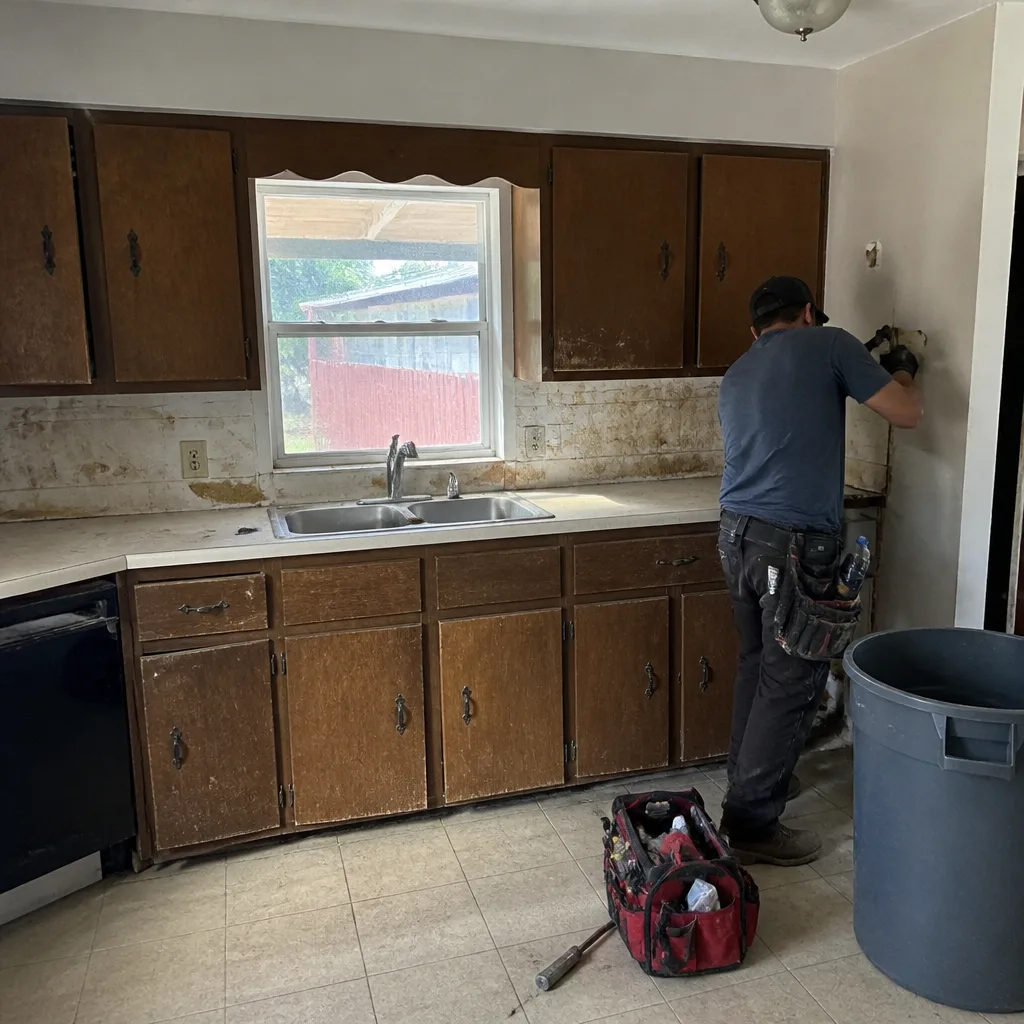 Before
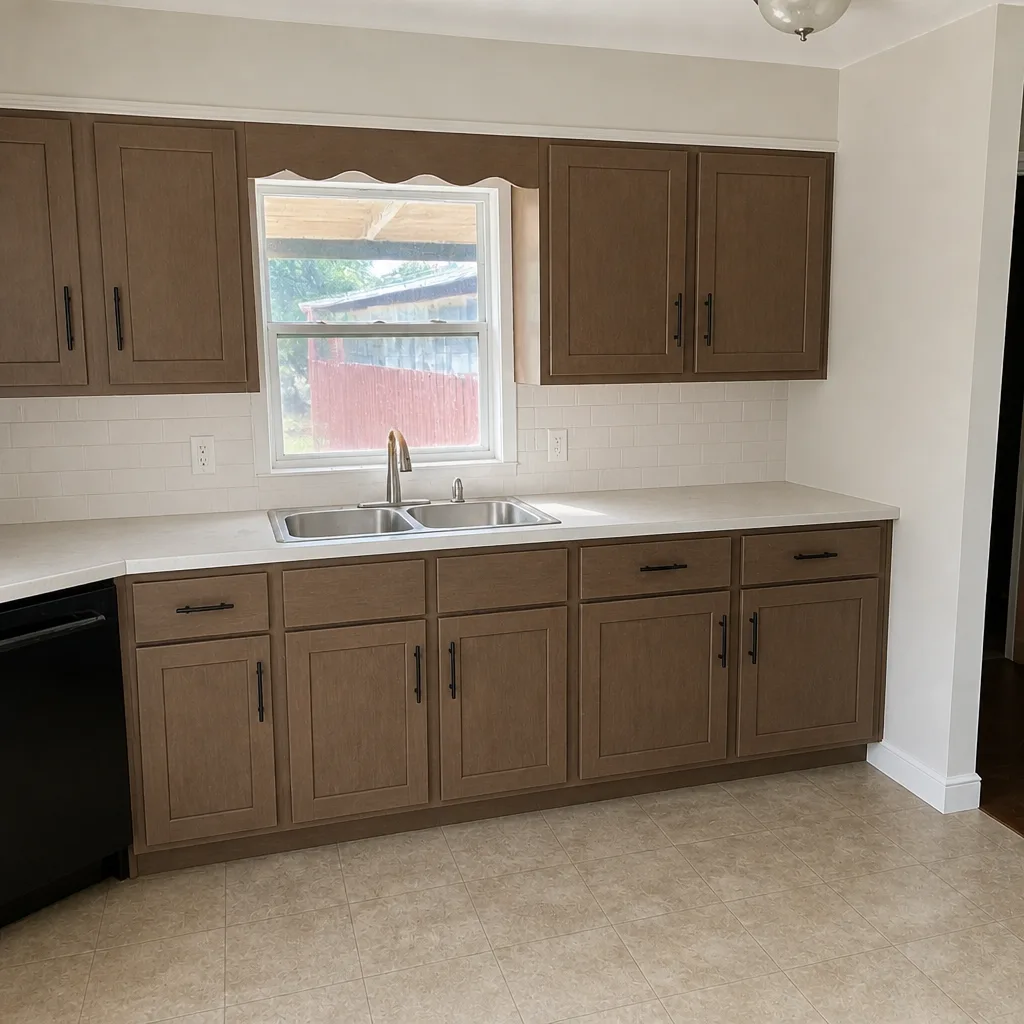 After
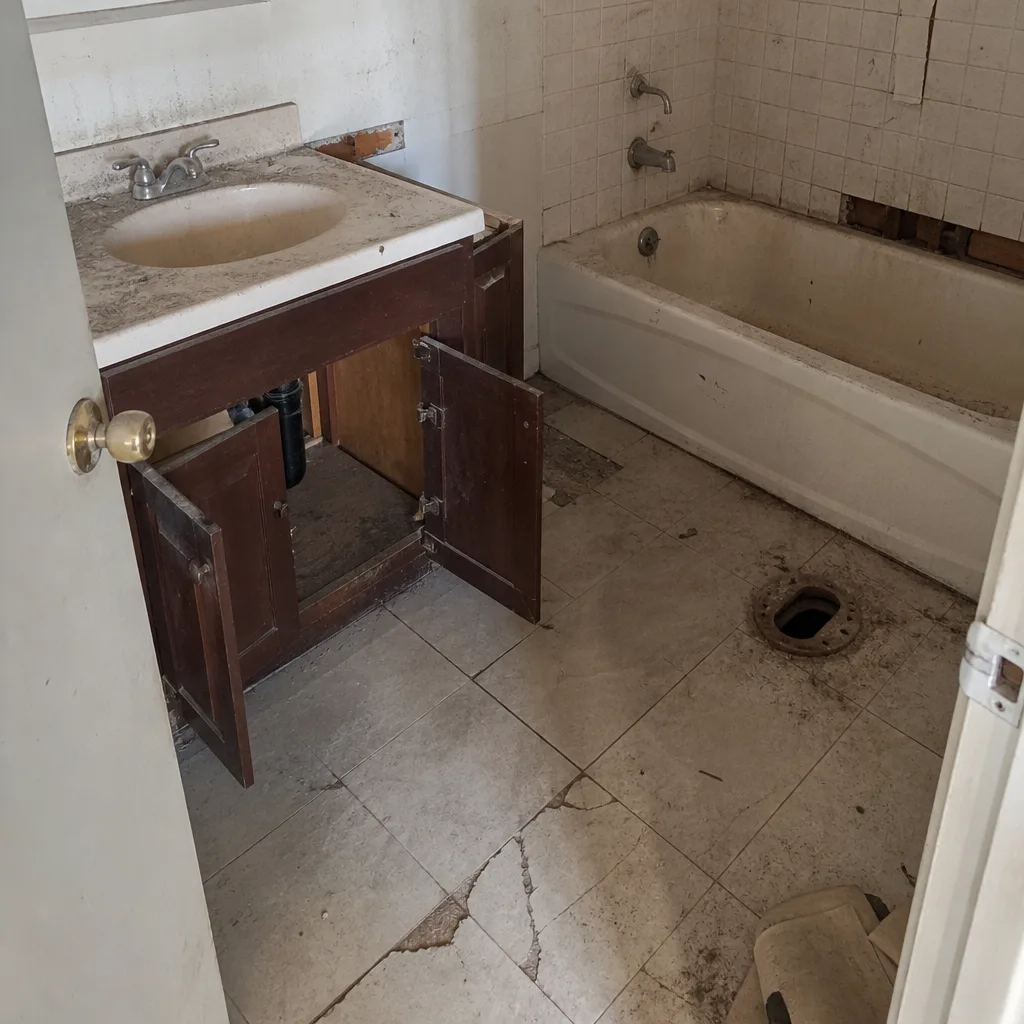 Before
 After
 Before
 After
When to Call a Professional

You should call a professional the moment any of these are true: your contract has no written change-order clause, the permit can’t be looked up in Clark County’s system, the person who shows up on site isn’t the person you signed with, or money is being requested ahead of a milestone. These are all early-timeline signs, and every one of them is easier to fix in week one than in month three. If you’re on the fence about a project you already started with someone else, a free second opinion on any written estimate is worth the hour. If you’re planning an addition or ADU, the right time to talk is before the contract is signed. Barrett & Sons Construction Sunrise Manor offers free estimates in Sunrise Manor – call (844) 312-0069 or schedule a walk with the crew.
For related work that often runs alongside an addition, we can help with hardscape and grading for the new footprint through Driveway & Pavers in Sunrise Manor, and with the yard perimeter where an addition changes the lot line, see Fence Installation in Sunrise Manor. When a fully prefab route makes more sense for your lot, brands like Abodu and Mighty Buildings are worth pricing against a stick-built scope – both are modular ADU options we’ll happily compare in writing.
Frequently Asked Questions
A typical ADU in Sunrise Manor runs from roughly $120,000 for a compact 400 to 600 square foot detached unit to $300,000 and up for a larger two-bedroom unit with full kitchen and bath, and the range depends almost entirely on site work, utility tie-ins, and finish level. We can’t give you a real number until we walk the lot and see the utility connections, but you’ll get an itemized, written scope with each allowance before you sign. Call (844) 312-0069 for an exact quote – estimates are free.
A good contract keeps the price fixed until the scope changes, and every price change arrives as a written change order before work proceeds. The number moves only when the work moves – and you see it on paper. Anything else is the surprise invoice you were trying to avoid. Call (844) 312-0069 to review a written scope on your project.
Yes – on every eligible job, we pull the permits and take responsibility for the inspections being signed. That means the permit is filed with Clark County before work starts, the scope on the permit matches the scope of the build, and the sign-offs are on record. If you’ve been told permits are optional, that’s the warning sign you should act on. Call (844) 312-0069 for a free estimate that includes the permitting plan.
A modest addition takes about four to six months from permit approval to final inspection, and an ADU with its own utilities typically runs six to nine months. The first two weeks – permitting, site survey, crew assignment – set the realistic schedule, not the contractor’s pitch. Call (844) 312-0069 and we’ll walk your lot and give you a written timeline with real milestones.
A large cash request outside the written payment schedule is one of the clearest signs a project is in trouble, and the right answer is no – not until you have a written change order and a milestone on record. It’s also worth calling a second contractor for a free second opinion on the estimate and the payment history. Call (844) 312-0069 and we’ll look at what you’ve signed so far.
Yes, and you should. Nevada’s contractor board and Clark County’s online permit portal let you look up a license number and a specific permit by address. If a contractor won’t give you the permit number in writing, or the permit status doesn’t match the work, that’s the first two-week warning sign. Call (844) 312-0069 and we’ll walk you through what to check before you sign anything.
The Bottom Line
The good news is that bad projects are quiet before they’re loud. The contract with vague scope, the permit you can’t find, the unfamiliar crew, the cash request before a milestone – each of those is a signal in the first two weeks, and each one is cheap to catch then. If you only remember one thing from this guide, make it this: scope in writing, allowances in writing, change orders in writing, and permit sign-offs you can verify yourself. Get those on paper and the rest of the project has a fair chance. Skip them and you’re hoping. If you want a written scope to compare against, Barrett & Sons Construction in Sunrise Manor offers free estimates – call (844) 312-0069 and we’ll walk your property and put the whole number on paper.
Written by the team at Barrett & Sons Construction Sunrise Manor.