Last updated November 18, 2026







Free written scope consultation - allowances, timeline, and change-order rules on paper before a single trade is scheduled
Windows & Doors Warning Signs Every Homeowner Should Know
A hairline crack in the exterior caulk around a window frame looks like a cosmetic issue. After one of Sunrise Manor’s two-inch-an-hour monsoon rain events, that crack becomes a wall cavity full of water and the start of a mold problem behind your drywall. That’s the trap with windows and doors: they almost never fail all at once. They warn you first, in small ways that are easy to wave off until the repair bill has a comma in it. This guide is about learning which signs to take seriously and which ones can wait for the next cool weekend.
Quick Answer
The warning signs that matter most are water intrusion at the exterior (soft caulk, staining, bubbling paint), fog or haze between the glass panes, doors that suddenly stick or won’t latch, and dust or condensation patterns on the inside of a frame. Any one of these means the assembly has already started letting in water, air, or heat. Catch them early and a repair is a few hundred dollars. Ignore them through a couple of Sunrise Manor summers and you’re looking at framing and drywall work that starts in the thousands.
Styles & brands we work with
- Kitchen remodeling
- Bathroom remodeling
- Home additions & ADU
- Roofing
- Windows & doors
- Driveway & pavers
- Fence
Table of Contents
- The Five Exterior Warning Signs You Can Spot From the Ground
- Interior Warning Signs Homeowners Blame on the HVAC
- How to Catch Sealed Glass Failure Before the Fogging Stage
- What a Sagging Door Tells You About the Wall and the Slab
- Why Sunrise Manor Monsoons Expose Weak Installations Fast
- Red Flags to Watch During a Window or Door Installation
- Signs, Causes, and What Each One Usually Costs
- When to Call a Professional
The Five Exterior Warning Signs You Can Spot From the Ground
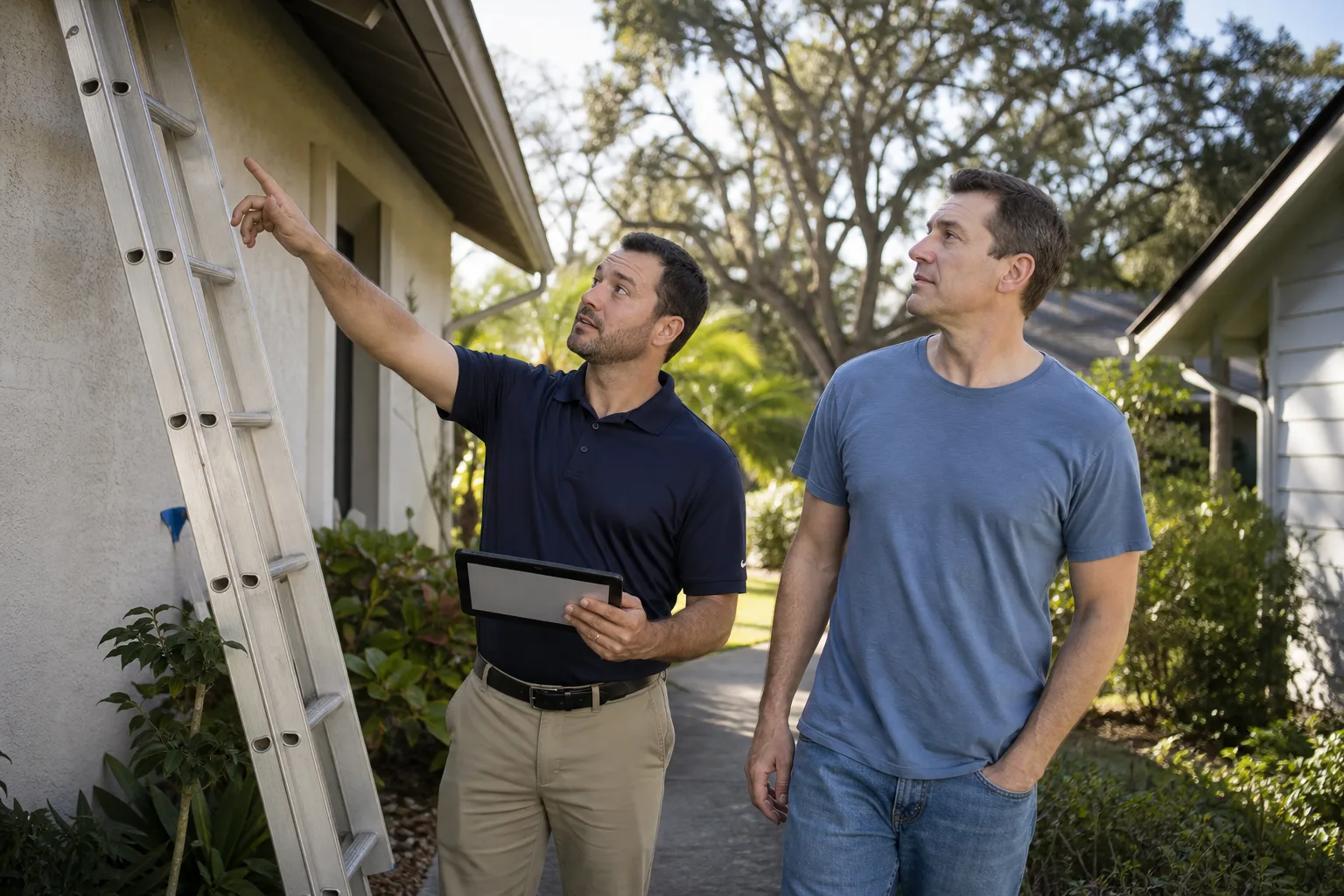
You don’t need a ladder or a moisture meter to do this inspection. A flashlight and ten minutes walking the perimeter of your house will tell you most of what you need to know. Do it after a dry stretch, and again a day or two after a real rain if you want the full picture. Here’s what to look for, in order of how seriously we treat each one.
- Caulk that’s cracked, pulled away, or chalky. Run a fingertip along the joint where the frame meets the siding or stucco. Fresh caulk feels like soft rubber. Failed caulk feels like dried wax and pulls away in strings. A hairline crack here is the single most common entry point for water in Sunrise Manor because the dry heat bakes caulk faster than most of the country expects.
- Paint bubbling or peeling around the frame. Paint doesn’t peel for no reason. When it bubbles in a tight band around a window or door trim, there’s water sitting behind it pushing the film loose from the wood.
- Dark staining or tide marks on the wall below a sill. Look straight down from the bottom edge of the window. A faint dark line that looks like it was drawn with a wet finger is a water trail, and it means the sill pan underneath has failed or was never installed correctly.
- Gaps between the frame and the wall sheathing. Shine the flashlight sideways along the frame edge. If you can see daylight or a shadow line, the seal is broken and the wall cavity is open to wind and rain.
- Lifted or curled flashing above a door or window head. The metal or membrane that sheds water over the top of the opening should lie flat and lap over the siding. If it’s lifted at a corner or curling, water rolls behind it and straight down into the wall.
None of these require special tools. All of them get worse with every storm season. The first one is cheap to fix. The fifth one usually isn’t, because by the time you can see lifted flashing there’s often rot behind it.
Interior Warning Signs Homeowners Blame on the HVAC
Most of the calls we get about “the AC not keeping up” turn out to be a window or door problem, not an equipment problem. It’s easy to blame the furnace or the air handler when a room runs hot or stuffy, but the equipment is often doing exactly what it was sized to do. It’s the envelope that’s leaking.
Here’s what to look for inside, especially in a room that’s never quite comfortable no matter what you set the thermostat to:
- Hot spots on walls near a window or exterior door. Hold the back of your hand an inch from the drywall around a frame on a hot afternoon. If one patch feels distinctly warmer than the rest of the wall, the frame is transferring heat and the insulation around it has likely failed or settled.
- Humidity spikes in one room at a time. A bathroom or kitchen that fogs its mirrors and never clears, while the rest of the house is fine, usually has an air leak at a window or door letting the outside humidity mix in. In Sunrise Manor this shows up most in summer when the indoor-outdoor temperature difference is huge.
- Dust streaks or dark smudges around frames. Every time air moves through a gap, it carries dust with it. A fuzzy dark line along the inside edge of a window or door is an air-leak map – it shows you exactly where the outside is coming in.
- Condensation on the inside of the glass in cool weather. Some condensation on the interior glass during a cold snap is normal. Condensation that beads and runs, or that pools on the sill, is not. That’s warm moist air hitting cold glass because the window itself has lost its insulating value.
- Drafts you can feel with a wet finger. Lick your finger, hold it near the edges of the frame on a windy day, and move it slowly around the perimeter. You’ll feel a cool spot where air is moving. It’s an old trick and it still works.
If you find several of these in the same room, the window or door is the culprit. Replacing the HVAC equipment won’t fix an envelope problem, and we’ve watched homeowners spend thousands on a new unit before they ever looked at the windows.
How to Catch Sealed Glass Failure Before the Fogging Stage
Insulated glass units – the double-pane windows in most modern homes – have a sealed gas space between the panes. That seal can fail through heat cycling, pressure changes, or a bad factory edge. When it does, moisture gets in and the window fogs from the inside. But by the time you can see fog, the unit has often been failing for months.
Here’s how to catch it earlier, before the fogging stage:
- Look for a wavy or ripple pattern in the glass at an angle, with the sun behind it. A healthy pane looks like clean flat glass. A failing unit can develop a faint wave near one corner where the seal has started to let go.
- Check for a faint haze near the bottom edge on a cool morning. The fog starts at the lowest point and works its way up. That first thin haze is your earliest warning.
- Watch for “rainbow” or iridescent interference patterns when you look through the window at a low angle. This is an optical sign of a compromised gas space and shows up before visible moisture.
- Put a piece of white paper on the far side of the glass and look through from the inside. Cast a flashlight beam across the surface at a flat angle. Any cloudiness or distortion that doesn’t move as you shift the light is in the glass, not on it.
Why does catching it early matter? A failed sealed unit is a straightforward glass replacement, typically a few hundred dollars per window, and the existing frame usually stays. Once the moisture has been inside long enough to fog visibly, the glass has likely lost most of its insulating value and the frame may have begun to take on water. Miss it long enough and the wall below the window starts to soak. Then you’re paying for drywall repair and possible framing work on top of the glass. Same failure, wildly different bill.
What a Sagging Door Tells You About the Wall and the Slab
A door that suddenly sticks at the top, scrapes the threshold, or won’t latch is doing more than annoying you. It’s telling you something about what’s happening underneath and around it. In a house, doors are among the most honest instruments you have. They don’t lie about movement.
Here’s the short version of what a sagging or misaligned door is telling you:
- Sticking at the top corner: the wall or header above the opening has moved, or the door has racked because one hinge has lost its bite. This is often a hinge problem and a simple fix.
- Scraping the floor at the bottom: the slab or subfloor has settled, or the door has swollen from taking on moisture. If the door has swollen from a water problem at the threshold, that’s the urgent version.
- Won’t latch or pops open on its own: the frame has twisted out of square. On an exterior door, this usually means a water leak has softened the framing or the sill plate.
- Gaps you can see daylight through: the door no longer fits its frame, which means the wall around the frame has moved. This one needs a professional look before the next monsoon.
Urgent versus can wait? A door that sticks but still latches and shuts tight can wait for the next cool weekend. A door that’s taking on water at the threshold, has visible rot in the frame, or lets daylight through is urgent. Water at a door sill in Sunrise Manor gets into the framing quickly because there’s very little between a monsoon downpour and your wall cavity except the door assembly itself.
If you’re already planning bigger work and want to fold door and window replacement into a broader project, that’s a conversation worth having early. We handle Home Additions & ADU in Sunrise Manor, and openings come up as part of that planning all the time.
Why Sunrise Manor Monsoons Expose Weak Installations Fast
Sunrise Manor sits at the edge of the Mojave, which means two things for windows and doors: brutal sun exposure most of the year, and short, intense summer rainstorms that drop more water in an hour than some parts of the country see in a month. That combination is harder on window and door assemblies than almost anywhere else in the country.
The sun does the slow damage. UV breaks down caulk and sealants. Exterior paint chalks and fades. Vinyl and wood expand and contract with the day-night temperature swing, which can be forty degrees or more. Every one of those cycles is a small working of the joints around your windows and doors.
The monsoon does the fast damage. A two-inch-an-hour downpour hits the wall with real pressure and finds every weak point at once. A hairline crack that sat harmlessly dry for a year suddenly has a river running through it. We’ve walked properties in Sunrise Manor after a storm and found water in the wall cavity of a window that looked perfectly fine from the ground two days before.
Two practical habits pay off here. First, plan a perimeter inspection and caulk touch-up every spring, before the first monsoon. It’s a Saturday-morning job and it’s the cheapest insurance you can buy on your windows. Second, keep an eye on the north- and east-facing sides of your house after a big rain, since they often take the brunt of the runoff and dry out more slowly, giving water more time to work into the wall. If you’re replacing windows or doors as part of a bigger exterior project, our Barrett & Sons Construction Sunrise Manor home page is the place to start, and the same maintenance mindset applies to Fence Installation in Sunrise Manor, which takes the same sun and rain beating on a smaller scale.
Red Flags to Watch During a Window or Door Installation
A window can be perfectly good at the factory and still fail in five years because of how it was installed. The installation is where the water gets in, not the glass. If you’re having windows or doors replaced, these are the things to watch for while the crew is on your house.
- Skipped sill pan flashing. Every exterior window and door needs a proper sill pan – the sloped, integrated flashing that drains water out and away from the rough opening. If the crew sets the window directly onto the framing without it, water that gets behind the frame has nowhere to go but into the wall. This is the most common installation failure we find.
- Foam-only sealing with no backer rod. Expanding foam alone, sprayed into a wide gap, will eventually crack and pull away as it cures and cycles. The right way is to set a backer rod in the joint first and foam against that, so the foam has something to bond to and compress against. Foam with no backer rod is a shortcut, and it shows up as a draft at the frame within a couple of seasons.
- Exterior caulk over dirty or wet surfaces. Caulk sticks to clean, dry surfaces and to nothing else. If a worker is running a bead over dusty siding or right after a rain, that seal will fail. Watch the prep: the joint should be brushed clean, dry to the touch, and often primed before the bead goes down.
- No flashing tape over the rough opening. Modern installation best practice wraps the rough opening with a flashing membrane before the window goes in. It’s not optional in wet climates, and it matters in Sunrise Manor too.
- Windows set out of level. A window that isn’t level or plumb will bind, fail to latch cleanly, and stress its own seals. It’s worth putting a level on the sill while the installation is happening.
- No permit and no inspection. This is the big one, and it’s the reason we pull a permit on every eligible window and door job. An inspector checks the flashing and the seal before the wall is closed up. The permit inspector works for you, not for the contractor. If a contractor tells you permits are optional for a window replacement, that’s a red flag by itself.
We install Andersen and Marvin windows on the jobs where they’re the right fit, and we install Owens Corning roofing products under the same philosophy: check the brand and check the paperwork. A material you can look up is a material you can hold someone to.
Signs, Causes, and What Each One Usually Costs
None of these prices are quotes, and none of them are promises. They’re the ranges we see on Sunrise Manor jobs so you have something to anchor on when you’re pricing work.
- Failed exterior caulk around a frame: cause is UV aging; typical repair is a few hundred dollars or less for a handful of windows, and often a Saturday DIY job if you’re comfortable on a ladder.
- Failed sill pan or flashing: cause is installation error; repair involves opening the wall, replacing flashing, and often repairing some framing; usually a mid-four-figure job once the wall is open.
- Fogged or hazing sealed glass unit: cause is seal failure; a single glass replacement usually runs a few hundred dollars per window, with the frame often reused.
- Sticking or sagging door: cause is a hinge, header, or slab issue; a hinge adjustment is small, a threshold or sill repair is a few hundred to a couple thousand depending on what’s underneath.
- Rot in a door or window frame: cause is long-term water intrusion; usually a mid-four-figure repair with carpentry and finish work involved.
- Mold behind drywall at a window: cause is water that’s been getting in for a while; the repair cost depends entirely on how far it’s spread, and this is where ignoring a small sign gets expensive.
If you’re also thinking about paving or a new walkway as part of a bigger exterior refresh, our Driveway & Pavers in Sunrise Manor page covers the outdoor side of the same project.
Common Mistakes to Avoid
- Caulking over wet or dirty joints. If the caulk goes on before the frame is clean and dry, the bead will fail within a season, and the leak will come back worse than before because now you can’t see it. Prep is the whole job.
- Treating foggy glass as a cosmetic issue. A fogged sealed unit has lost most of its insulating value. It’s not just ugly – it’s letting heat in during a Sunrise Manor summer and letting it out in winter, and the moisture that fogged it is already working on the frame.
- Assuming the HVAC is the problem. We’ve seen homeowners replace a perfectly good air handler before anyone looked at the windows. If one room runs hot, check the frames before you call the HVAC company.
- Letting a stuck door slide through a monsoon season. A door that scrapes the floor and doesn’t quite latch is often a water-in-the-threshold problem. Let it go through one hard rain and you’ll be looking at framing repair, not a hinge adjustment.
- Skipping a permit to save time. A contractor who tells you the permit inspector will slow you down is telling you they don’t want an independent set of eyes on the flashing. Skip the permit and you own the leak.
- Replacing windows without checking the flashing underneath. New windows over a failed sill pan will leak just as fast as the old ones. The window was often fine – the installation around it wasn’t.
- Forgetting the spring inspection. A ten-minute walk-around with a flashlight every April catches the small stuff before the monsoon finds it. It’s the cheapest maintenance habit a Sunrise Manor homeowner has.
See the difference
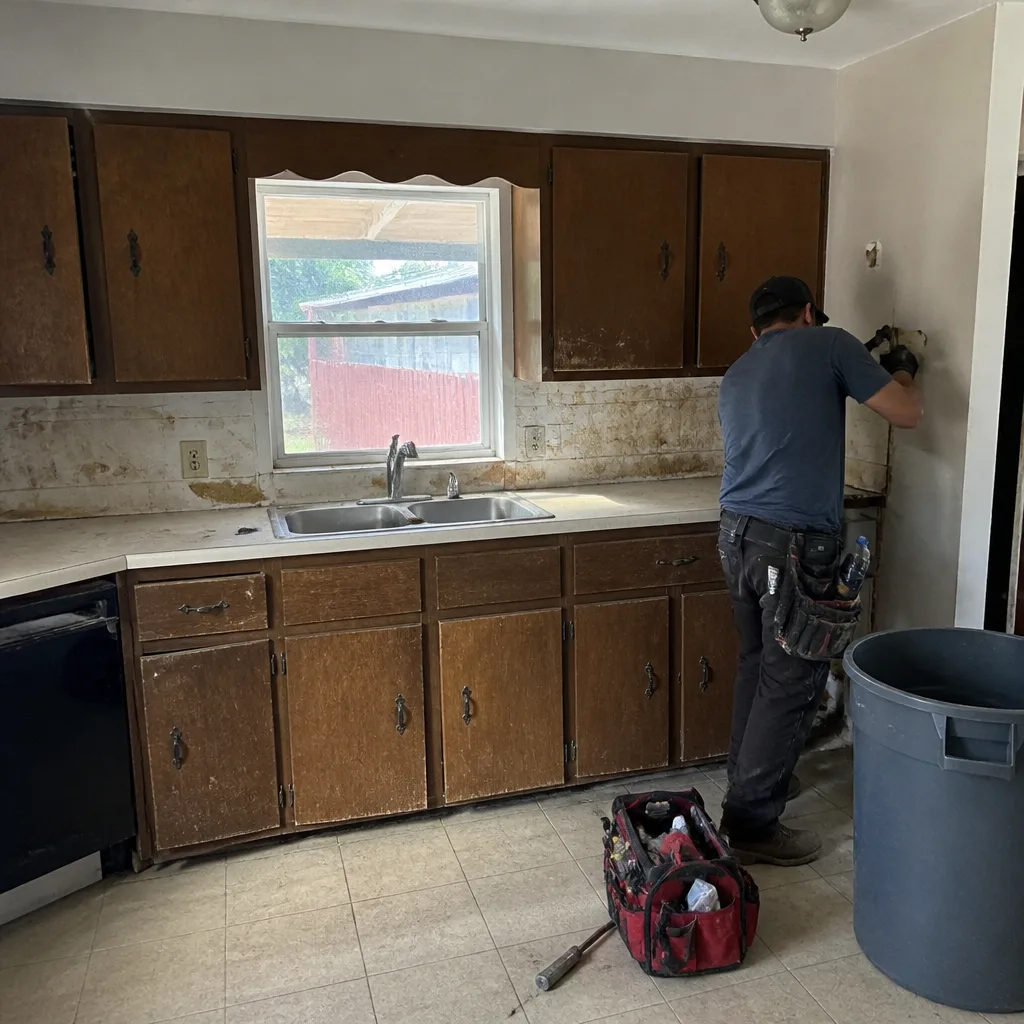 Before
 After
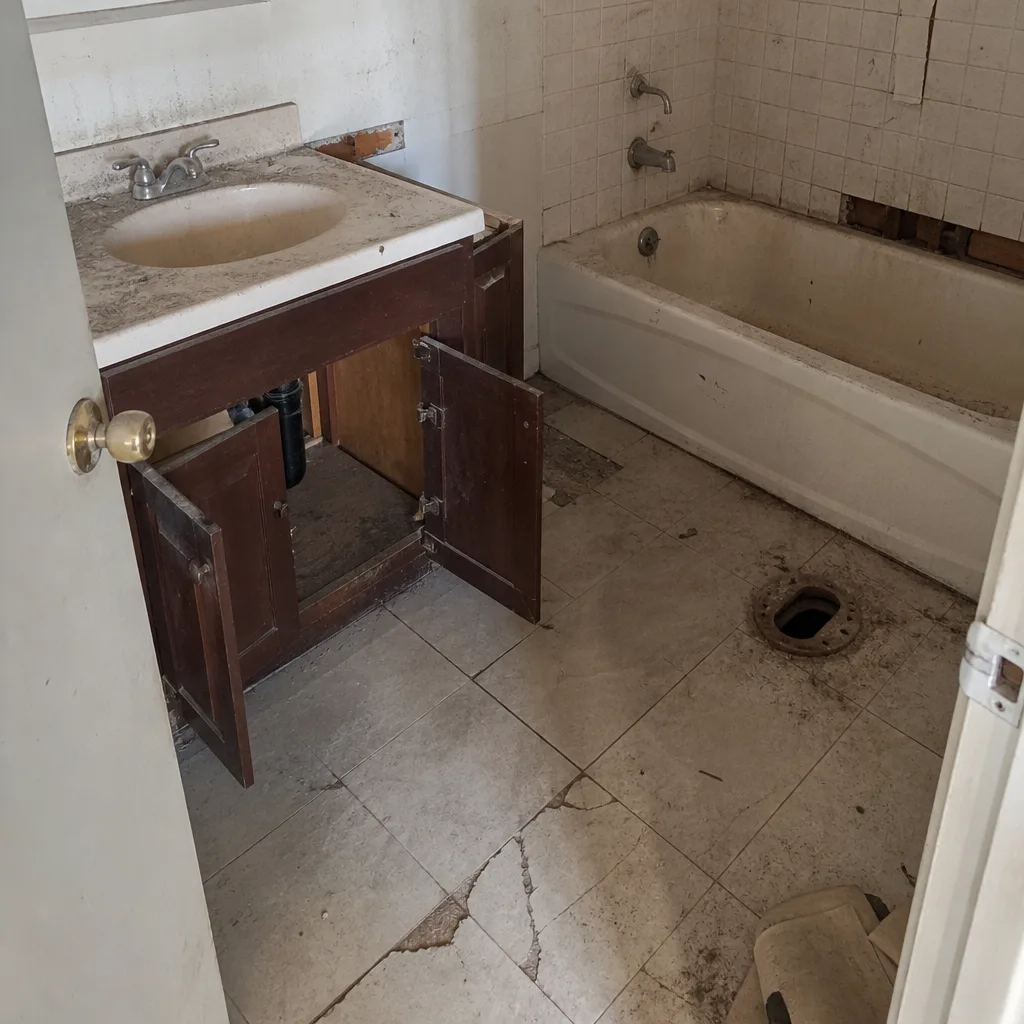 Before
 After
 Before
 After
When to Call a Professional
Call a professional when you see water staining on the wall below a window or door, mold anywhere near a frame, a door that won’t latch or that’s showing rot at the threshold, or a sealed glass unit that’s fogged. Those are the signs that a repair has already started. Call sooner if a Sunrise Manor monsoon has left a visible water trail or if you can see daylight through a window or door frame. On the other hand, if you just want a second opinion on a written estimate a contractor handed you, bring it by – the permit inspector works for you, and a second set of eyes on a scope and a price almost always pays for itself.
Barrett & Sons Construction Sunrise Manor offers free estimates in Sunrise Manor – call (844) 312-0069. We pull permits on every eligible window and door job, put every scope and every price change in writing before work starts, and back the completed job with a written 90-Day Done Right Promise. Our technicians have up to 28 years of experience, and every crew member is background-checked and carrying the Barrett & Sons name.
Frequently Asked Questions

The most common warning signs are cracked or chalky exterior caulk, fogging or haze between glass panes, doors that stick or won’t latch, dust streaks around frames, and condensation pooling on sills. Any one of these means the assembly has started letting in water, air, or heat. Catch any of them early and the repair is usually small.
A foggy sealed unit almost always needs the glass replaced, but the frame can often stay. A well-installed frame that’s only showing fogged glass is a glass-swap job, typically a few hundred dollars per window. If the frame itself is soft, stained, or showing water damage, that’s a bigger repair. Call (844) 312-0069 for a free estimate and we’ll tell you which one you’re looking at.
Sometimes yes and sometimes no. A door that sticks at one hinge but still latches cleanly is usually a simple hinge or weatherstripping fix. A door that won’t latch, pops open on its own, or scraps the floor and shows rot at the threshold is telling you the wall or sill has taken on water. That one needs a look before the next rain.
Twice a year is the right rhythm here. Do a walk-around with a flashlight every spring before the monsoon season, and again in the fall. Sunrise Manor’s sun and heat break down caulk faster than most of the country, so the spring touch-up is the one you don’t want to skip.
Often yes, and it varies by the scope of the work and the current code requirements for the property. We pull a permit on every eligible window and door job, because the inspection verifies the flashing and the seal before the wall is closed up. Skip the permit and you own the water leak that shows up two summers later.
Not without a written change order signed before any new work happens. If we open a wall and find more rot than we expected, you get a written change order describing exactly what’s involved and what it costs before anyone touches it. No surprise invoices at the end – the allowance that isn’t on paper is a surprise waiting for a date.
The Bottom Line
Windows and doors tell you what’s wrong in plain language, but only if you know what to look for. Cracked caulk, fogged glass, sticking doors, dust streaks around frames, and tide marks below sills are all early signs that a small problem is already underway. In Sunrise Manor, monsoon storms turn those small problems into wall-cavity problems fast, so the spring walk-around is worth more than any repair you’ll ever buy. If you spot water damage, rot, or mold, call us. If you just want an expert opinion on a window or door that’s been bothering you, call us for that too. An estimate is free, and a repair caught in time is always the cheaper version of the story.
Written by the team at Barrett & Sons Construction Sunrise Manor.